



Predictive SEO: leveraging AI to anticipate search intent
In a digital landscape that changes at lightning speed, staying ahead of user behavior is crucial for online success. Predictive SEO harnesses the power of artificial intelligence to analyze trends, anticipate search intent, and optimize content strategies accordingly. By leveraging AI-driven insights, businesses can create more relevant and timely online experiences, ensuring they reach audiences before competitors do. This proactive approach not only boosts visibility in search engine results but also enhances user engagement and conversions, making predictive SEO an essential component for forward-thinking digital marketers.
Key Highlights
- Predictive SEO uses AI to analyze trends and anticipate search intent, enabling more proactive content strategies.
- AI-driven search intent goes beyond keywords, considering context, device use, and behavior for precise targeting.
- Machine learning algorithms uncover emerging patterns and future trends, giving marketers a competitive edge.
- Integrating AI tools allows real-time trend forecasting, automated audits, and dynamic content optimization.
- Continuous learning and human oversight ensure AI-driven SEO remains effective, adaptable, and user-focused.
Understanding Predictive SEO and AI-Driven Search Intent
Predictive SEO is rapidly transforming the digital marketing landscape, allowing businesses to get ahead by leveraging AI to understand and anticipate user search behaviors. As search engines evolve, the focus shifts from reactive strategies to tools that forecast what users are likely to seek next. This approach empowers marketers to develop content and optimization methods directly aligned with emerging trends. Here, we’ll delve into the foundational elements of predictive SEO, explore how AI interprets and predicts search intent, and outline the essential concepts every marketer should grasp to excel in this evolving space.
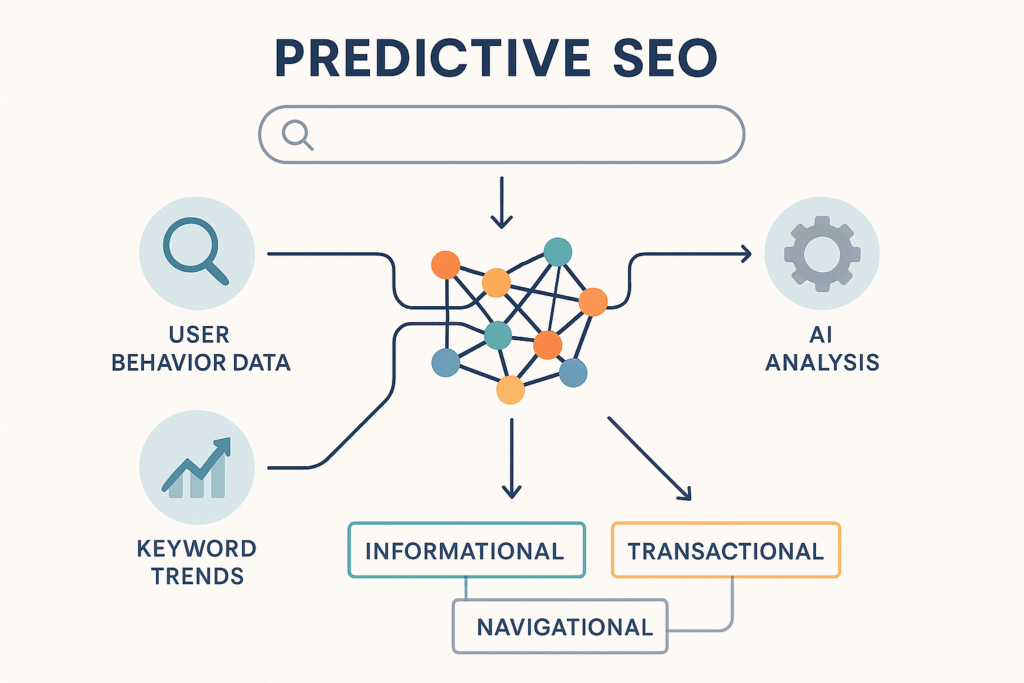
Key Concepts Behind Search Intent Anticipation
To truly master predictive SEO, it’s vital to start with a nuanced understanding of what search intent means and how it’s evolving in today’s AI-powered digital ecosystem. Search intent, in its simplest form, represents the underlying goal or purpose that drives a user’s search query. Whether someone’s looking to buy a product, gather information, or compare options, deciphering this intent is key to delivering content that resonates and ranks well. However, predictive SEO takes things a step further by not just identifying known intent categories, informational, navigational, transactional, and commercial, but by anticipating subtle shifts in what and how users search.
Modern predictive SEO relies heavily on data-driven insights and machine learning algorithms to analyze vast amounts of historical query data, engagement metrics, and behavioral signals. These AI tools detect patterns that may elude human analysts, such as emerging topics or new question formats. They can even flag seasonal trends before they become widely apparent. By continuously monitoring how searchers interact with content and change their phrasing over time, predictive SEO solutions make it possible to adjust strategies proactively. This capability has a profound impact: instead of reacting to changes after they happen, you have the foresight needed to create content and optimize for keywords that will soon become popular.
AI-driven search intent analysis goes beyond parsing keywords, it examines context, device preferences, user location, and even past behavior to reveal a fuller picture of user motivation. For instance, someone typing “best running shoes” on a Saturday might be expressing different intent than someone searching the same phrase on a weekday morning. Predictive SEO tools factor in these nuances, helping marketers personalize content and prepare landing pages that precisely match anticipated user needs. This finer level of targeting not only enhances search engine rankings but also improves on-site engagement and conversion rates.
By leaning into predictive SEO, brands position themselves to address emerging questions, fill informational gaps, and meet users where they’re heading, rather than where they’ve been. Harnessing AI’s ability to surface deep insights from complex data enables content creators and strategists to map out topic clusters tied to future trends, optimize pillar pages, and build internal linking strategies that amplify site authority. Integrating these approaches requires ongoing learning and adaptation, but when executed well, they unlock sustainable search performance and give companies a competitive edge.
For businesses looking to harness the full potential of predictive SEO, it’s important to get hands-on with tools that offer real-time trend prediction, semantic analysis, and competitor benchmarking. Solutions such as those offered at Dashspert can augment your strategy by delivering actionable data and tailored recommendations. As the world of search evolves ever faster, investing in the right resources and understanding the fundamental concepts of predicting search intent will distinguish successful brands from the rest. Keeping pace with these advancements ensures your digital presence isn’t just current, it’s ahead of the curve, prepared to capture new audiences the moment they begin their journey online.
Building on these insights, marketers can take the following practical steps to harness predictive SEO for uncovering future search intent:
- Analyze historical search data to identify emerging patterns and topical shifts in user queries.
- Utilize AI tools to forecast trending keywords and evolving customer interests in your niche.
- Cluster related search terms to map intuitive content pathways matching user journeys.
- Regularly update content based on predictive models highlighting new, high-opportunity topics.
- Monitor competitor strategies and adapt quickly to changes in audience search behavior.
- Align on-page SEO elements with anticipated user questions and context-rich queries.
- Leverage structured data to boost visibility in featured snippets and voice search results.
- Continuously test content formats to see which best address predicted user intent shifts.
Proactively adopting these techniques will keep your SEO strategy agile and responsive to the ever-changing landscape of user search behavior.
The Role of Machine Learning in Predictive SEO
Machine learning stands at the heart of the shift toward anticipatory digital marketing, acting as the engine behind smarter, more adaptive SEO strategies. By continually analyzing vast streams of search and behavioral data, algorithms reveal hidden patterns that guide site owners and marketers toward creating content aligned not just with what audiences want now, but with what they’ll want next. This section explores the mechanisms through which artificial intelligence deconstructs digital behavior and predicts future trends, highlighting the increasing sophistication and necessity of data-driven search strategy in today’s competitive online environment.
How AI Algorithms Analyze and Forecast User Behavior
The leap from traditional SEO tactics to anticipation-based optimization relies almost entirely on how machine learning models interpret user data at scale. Unlike static approaches that respond to previously established keywords and trends, these adaptive algorithms ingest and process millions of data points from across the digital ecosystem, clicks, dwell time, bounce rates, session paths, device data, and more, to build a living picture of collective user intent. Central to this process is natural language processing (NLP), a branch of AI that allows algorithms to grasp not just the literal meaning of a query, but its implied context, tone, and evolving nuance as language trends shift over time.
This nuanced analysis means machine learning can uncover patterns invisible to manual review. Through supervised learning, algorithms are trained on labeled datasets that outline known behaviors, such as which navigation paths lead to conversions or which content types boost engagement in certain sectors. Over time, as these models analyze increasingly complex user journeys, unsupervised and reinforcement learning methods take over. These models spot novel, emerging patterns, like sudden spikes in searches around previously obscure topics, or shifts in the questions audiences are asking, often influenced by real-world events, pop culture changes, or seasonal behaviors.
Of particular importance is how AI identifies and accounts for intent shifts. For instance, with the integration of deep learning, systems can differentiate between a user searching “best laptops” during back-to-school season versus during the holiday sales period. While both queries look similar, prior behavior, session timing, and even device usage can indicate whether the user is researching for a future purchase or ready to buy now. Algorithms tap into historical logs, cross-device analytics, and social listening data to forecast which content formats, promotional strategies, or product features are most likely to satisfy the next request. This predictive capability enables marketers to craft hyper-relevant landing pages, targeted content clusters, and dynamic ad campaigns ready to meet users right as intent emerges.
The ongoing refinement of AI models is driven not just by static datasets, but by continuous feedback loops. When a user interacts with a search result, that action (or inaction) becomes a data point fed back into the model, influencing predictions about what will resonate with similar users tomorrow. This closes the gap between past and present behavior, gradually enhancing the system’s ability to spot and act on early trend signals. It’s this continuous learning loop that gives businesses a real-time edge, surfacing emerging topics before they saturate the market and highlighting micro-intents that might otherwise go overlooked in broader keyword research.
Furthermore, clustering and segmentation are key tactics within predictive analytics. AI-driven platforms break user data into actionable segments, by demographic, intent level, engagement pattern, or even by sentiment analysis, allowing for a flexible, granular approach to future content planning. Over time, site structures evolve alongside trends, internal links strengthen the authority of soon-to-be-popular pages, and on-site experiences adapt to what users are about to seek out.
Ultimately, AI-powered algorithms empower brands to keep their finger on the pulse of shifting digital behaviors. By interpreting signals from a sea of data and recognizing intent changes as (or before) they happen, these systems give marketers the strategic foresight to shape search experiences that are not only relevant but predictive, positioning their sites to win on tomorrow’s SERPs, not just today’s. This transformative approach, introduced through a deep understanding of search intent and executed with sophisticated machine learning, positions organizations as dynamic leaders in the ever-evolving landscape of digital discovery.
Implementing Predictive SEO: Practical Steps
Moving from understanding the theoretical framework of AI-driven search intent to actually applying it requires marketers to adopt tangible strategies that seamlessly integrate intelligent tools into their SEO workflows. Practical implementation means learning how to tap into real-time user insights, automate data analysis, and fine-tune content approaches that align with the fast-changing digital search environment. The following discussion explores actionable methods for integrating AI into your existing marketing operations and suggests tactical adjustments you can make right away to optimize for tomorrow’s search trends, ensuring your strategy is proactive and consistently ahead of the curve.
| Key Implementation Area | AI-Driven Action | Benefits | Ongoing Optimization |
| Keyword Forecasting | Leverage AI to predict emerging and trending keywords | Early mover advantage on high-value search terms | Continuously feed fresh data and monitor shifting trends |
| Content Gap Analysis | Use AI to identify and prioritize untapped content topics | Fills site gaps and addresses unmet user needs | Regularly update topic models with new competitive data |
| Competitor Monitoring | Deploy AI tools to track and benchmark competitor strategies | Proactive adjustment to outperform rivals | Automate alerts for significant competitor changes |
| User Intent Mapping | Utilize machine learning to classify and predict evolving user intents | Improved alignment of content with audience needs | Refine intent models as search behaviors evolve |
This table synthesizes the core stages of integrating AI into predictive SEO workflows, spotlighting both immediate tactics and ongoing refinement for lasting impact.
Actionable Tips for Integrating AI in Your SEO Strategy
Applying artificial intelligence to your SEO efforts is about moving from theory to execution, turning big data and complex algorithms into day-to-day practices that drive real results. One of the first steps when adding AI to your strategy is identifying the right tools that automate and augment your existing processes. Consider platforms equipped with features like real-time trend forecasting, automated site audits, and dynamic content recommendations. These tools are essential for cutting through the static of raw search data, letting you focus on actionable insights rather than being bogged down by information overload.
Data collection forms the backbone of any AI-enabled SEO strategy. Start by ensuring all relevant sources, Google Analytics, social listening tools, CRM systems, and even competitor monitoring services, are linked and feeding data into your analysis platforms. Regularly audit these connections to maintain data quality and completeness. Having a holistic data set lets machine learning algorithms identify genuine trends rather than one-off anomalies, leading to more accurate predictions and actionable recommendations.
Once your data streams are in place, prioritize the use of AI-driven keyword research. Rather than relying solely on static lists of popular keywords, leverage AI platforms that can analyze shifts in language patterns and user phrasing as they emerge. These systems surface newly trending topics, enabling you to capture traffic before competitors notice the shift. Expand your keyword targeting beyond the obvious by including question-based queries and long-tail variations that AI models recognize as growing in importance.
Content optimization gets a major upgrade with smart analytics. Use AI to analyze how different formats, headlines, and calls-to-action perform across channels. These insights can help you structure your content clusters more efficiently, ensuring you’re not just reacting to current demand but preparing for future intent. Integrate on-page SEO optimizations suggested by AI, such as adapting meta tags, internal linking patterns, and schema markup, tailored directly to the predicted interests and behaviors of your audience.
A key element of successful AI integration is continuous learning, treat your SEO as a living strategy that adapts as user intent evolves. Set up regular cycles for reviewing AI-generated insights and testing new hypotheses, whether it’s new content angles, different link structures, or updated landing page flows. Use A/B testing and real-world engagement data to refine these predictions, closing the feedback loop so AI systems improve with every update.
Collaboration between human expertise and AI tools amplifies results. Encourage your team to pair machine-generated suggestions with creative judgment, vetting automated recommendations for voice, tone, and brand alignment. This human-in-the-loop approach ensures that your site doesn’t lose its authentic personality while still capitalizing on cutting-edge data intelligence.
Don’t forget about technical SEO, AI can identify crawl errors, slow-loading pages, and broken links faster and in greater volume than manual audits allow. Prioritize fixes based on AI’s analysis of potential traffic and ranking impact, ensuring site health issues don’t undercut your predictive advantage.
Finally, always keep the user experience at the center of your strategy. AI might uncover what people are about to search, but it’s up to your team to turn those predictions into genuinely helpful, accessible, and valuable content that meets users where they’re heading. Regularly solicit user feedback and study on-site engagement signals to ensure the experience remains compelling for both search engines and real people.
Through a blend of intentional tooling, agile data analysis, continuous optimization, and human creativity, marketers can put sophisticated AI models to practical use. By following these actionable steps, you’ll transform predictive insights into tangible outcomes, driving not only higher rankings but also increased user satisfaction and long-term growth in an ever-evolving search landscape.