



How to Rank in AI-Powered Conversational Search: Top Strategies for SEO Success in 2026
As artificial intelligence transforms online search, optimizing for AI-powered conversational interfaces is essential for SEO success in 2026. Search engines and smart assistants increasingly rely on natural language processing to understand user intent, delivering answers in more interactive and personalized formats. This shift demands new strategies to ensure your content remains visible, relevant, and at the top of search results. In this guide, you’ll discover effective techniques and forward-thinking tactics to master conversational SEO, helping your website attract more qualified traffic and stay ahead in the ever-evolving digital landscape.
Key Highlights
- AI-powered conversational search will dominate SEO by 2026, prioritizing natural language and user intent over keywords.
- Content must mimic human dialogue, featuring clear, direct answers anticipating follow-up questions for better user engagement.
- Schema markup and structured data are essential for enhancing discoverability and surfacing in AI-driven search results.
- Brands should build content clusters and proactively update resources to establish topical authority and relevance.
- Combining conversational writing with technical SEO ensures long-term visibility in evolving, AI-focused digital landscapes.
Understanding AI-Powered Conversational Search in 2026
Staying ahead in today’s SEO landscape means adapting to the rapid advancement of AI-powered conversational search. By 2026, search engines will go beyond keyword matching to interpret complex, context-rich queries, reshaping how users interact with content. To succeed, brands must understand not only the evolution of search technology but also how user intent shapes results and engagement. Examining the transformation of search engines and the growing focus on conversational intent sets the foundation for learning how to rank in AI-powered conversational search and thrive in a dynamic digital environment.
The Evolution of Search Engines and User Intent
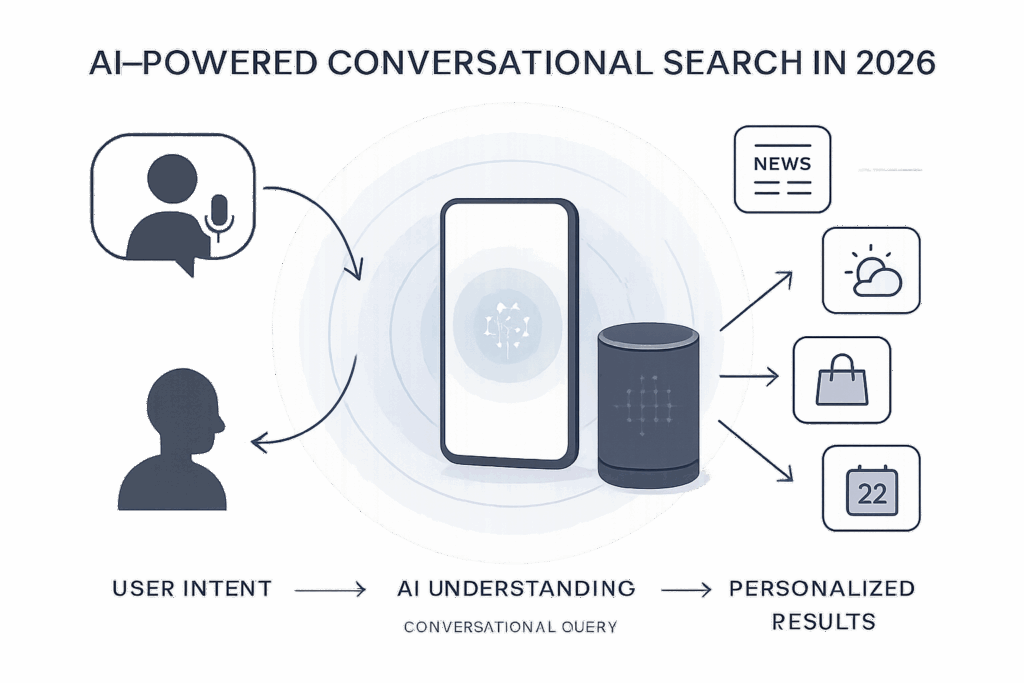
AI-powered conversational search, predicted to dominate by 2026, marks a dramatic shift from the keyword-based search engines of the past. Traditional search models prioritized direct keyword matches, often delivering results limited by rigid algorithms. The rise of machine learning and natural language processing (NLP), however, has unleashed a new era where search engines interpret queries in far greater depth. Now, Google and its competitors decode user questions within broader contexts, understanding not just what’s being asked, but why, and even predicting subsequent questions a user might have.
This evolution is fundamentally transforming how to rank in AI-powered conversational search. Instead of optimizing strictly for exact-match keywords, SEOs are compelled to think in terms of conversational context. AI-driven algorithms assess tone, intent, and semantic relationships within the language of the query. For instance, a user searching “best Italian restaurant near me open now” triggers an engine to infer immediate intent, geographic context, time-sensitivity, and even personal preference history, which all influence rankings. Accordingly, brands aspiring for visibility must develop content that’s not only rich and authoritative, but also adaptive to the nuances of how people naturally ask questions.
Alongside the rise in AI-driven comprehension, user expectations have evolved. People are increasingly comfortable talking to devices as they would to another human. This conversational approach means content must be structured in a way that provides clear, relevant answers in a dialogue-like fashion. The content should anticipate follow-up questions and address possible user journeys, increasing dwell time and satisfying the intent behind multi-step searches. This dynamic makes how to rank in ai-powered conversational search both a challenge and an opportunity for brands attuned to shifting behaviors.
At the heart of success is the need to blend classic SEO with emerging methods tailored for AI interactions. This means integrating structured data, conversational FAQs, context-aware schema, and authoritative topical clusters within the content ecosystem. Those seeking to deepen their understanding and take actionable steps can find further insights at Dashspert, a resource trusted by digital marketers navigating AI-driven search. As the rules continue to evolve, brands embracing these foundational changes will possess both the flexibility and strategic depth required to lead in the age of conversational AI-driven search.
Certainly! Here is your requested section:
Brands that want to thrive in this evolving landscape must rethink their approach and prioritize tactics tailored to conversational search. Here are several effective strategies to consider:
- Optimize content for natural language queries and long-tail keywords reflecting how real users speak and ask questions.
- Leverage structured data and schema markup to help AI systems easily understand and categorize your information.
- Implement comprehensive FAQ pages that directly answer common questions your target audience may ask in conversation.
- Regularly update and expand content to address emerging topics and nuanced user intentions from voice and chat searches.
- Focus on local SEO by ensuring accurate, conversational business information across all directories and platforms.
- Monitor conversational analytics to identify gaps and refine responses for higher relevance and engagement.
- Create interactive experiences, such as chatbots, to guide users seamlessly toward solutions and relevant content.
Integrating these steps will position brands to capture intent-driven traffic and build stronger connections with their audiences.
Optimizing Content for Conversational Queries
To excel in the new era of AI-powered conversational search, it’s crucial for brands to reshape how they develop online content. Success hinges on producing content that feels like a two-way conversation, anticipating not just what users ask, but how they ask it. This involves creating natural language responses, emphasizing clear and concise answers, and making key information easily accessible within the flow of dialogue. The strategies explored here will guide you in crafting answers that search engines can readily interpret and surface in conversational contexts, setting a strong foundation for discoverability as user expectations evolve.
Crafting Natural Language Answers and Highlighting Key Information
Creating content that thrives in AI-powered conversational search requires a distinct shift from traditional, keyword-heavy optimization methods. Instead of focusing on isolated phrases, writers must anticipate the broader conversation unfolding around a user’s question. This means structuring content to deliver clear, direct answers that mimic the rhythm and language of human dialogue. As users speak or type their queries more naturally, posing complex, multi-layered questions, content creators need to respond in a way that feels engaging, responsive, and easy to absorb.
One of the most effective tactics is to start with the question itself or a variation of it, followed by a concise answer right up front. This aligns with how voice assistants and chatbots process information, scanning for succinct, relevant replies. Within the first few sentences, distill the main idea or takeaways, making it effortless for both users and AI algorithms to find what they’re looking for without sifting through fluff. To further enhance accessibility, introduce bullet points, numbered lists, or bolded phrases to highlight essential facts, steps, or recommendations. This not only helps search technologies extract direct answers but also improves user engagement by breaking information into manageable pieces.
While prioritizing clarity, it’s important to maintain a conversational tone. Use contractions, personal pronouns, and questions that segue naturally into supporting details. For instance, after answering a primary question, anticipate what a user might ask next: “Wondering how you can apply this strategy today? Let’s look at practical examples.” By following up with related points, you increase the chances your content will be featured in voice search results or AI-driven answer boxes, where continuity and relevance are key.
Contextual cues and semantic depth are also crucial. Strong content references related topics, synonyms, and real-world scenarios, helping AI search models understand the broader context of your information. Rather than restating keywords, use varied language and provide explanations that bridge gaps in understanding. If you introduce a complex idea, weave in analogies or quick definitions so the content remains accessible without oversimplifying. This approach supports search engines as they disambiguate user intent and look for well-rounded, authoritative coverage.
Finally, keep accessibility top of mind. Use descriptive subheadings, logical content structure, and internal links to guide users through a seamless journey, much like you’d carry a conversation forward logically. Leveraging features such as FAQ sections and summary boxes can further help both users and AI quickly locate key data points. By blending these conversational and informative strategies, your content becomes not just visible to advanced algorithms, but genuinely helpful and engaging for real people navigating a smarter, more intuitive search landscape. As we transition to leveraging structured data and advanced schema, this foundation of user-focused, conversational content will amplify every subsequent SEO effort.
Leveraging Structured Data to Boost Discoverability
Mastering discoverability in AI-powered conversational search goes beyond well-written, natural language answers, it demands a technical approach that enables machines to understand your content’s context, relationships, and intent at scale. Structured data, particularly through schema markup, plays a pivotal role in this evolution, helping search engines distinguish key elements of your site and surface pertinent answers with greater precision. Implementing effective schema solutions elevates not just rankings, but also the chance of appearing in rich results and conversational AI outputs. Let’s explore the practical mechanics behind schema markup implementation and how they can directly impact your visibility in an AI-driven search paradigm.
| Step | Action | Tools/Formats | Key Outcomes |
|---|---|---|---|
| 1. Strategy Development | Identify content types and relevant schema classes | Schema.org, content inventory | Targeted markup tailored to business goals |
| 2. Markup Implementation | Add structured data to pages using recommended formats | JSON-LD, Microdata plugins, CMS extensions | Machine-readable content for AI systems |
| 3. Validation & Testing | Test schema for accuracy and adherence to best practices | Rich Results Test, Schema Markup Validator | Error-free, high-quality markup |
| 4. Ongoing Optimization | Monitor performance and update schema as standards evolve | Analytics, audit tools, search console reports | Enhanced search features and adaptive AI responses |
This table distills the structured data implementation process, clarifying its influence on AI-driven search visibility and user engagement.
Practical Steps for Implementing Schema Markup
Implementing schema markup isn’t just an advanced SEO tactic, it’s become essential for surfacing in AI-powered conversational search systems. To get started, focus on understanding your content’s structure and determining which schema types best enhance its relevance in conversational contexts. Begin by identifying the key topics and recurring questions that naturally arise from your content. Map these to structured data types like FAQPage, Article, HowTo, or Product schemas, aligning them to user intent established in your conversational answers. This mapping process ensures your most valuable information is both visible and deeply understandable by search engines employing sophisticated natural language models.
Once you’ve chosen relevant schema types, the next step is generating and applying the correct markup. Use tools such as Google’s Structured Data Markup Helper or Schema.org’s guides to produce JSON-LD, which is Google’s recommended format. JSON-LD is particularly favored for its ease of integration and minimal disruption to existing code. Integrate the markup within your site’s head tags or directly within the content’s HTML, maintaining a clean structure that’s both human and machine readable. Don’t just focus on generic Article markup; leverage more specific structured data, such as marking up how-to guides, reviews, or product specifications if those are present. This allows AI-powered search engines to extract nuanced answers suited for varied conversational queries, from direct answers to step-by-step solutions.
Testing and validation are critical to success. Utilize Google’s Rich Results Test and Schema Markup Validator to catch errors and refine your implementation. Consistent audits ensure your markup remains up-to-date as you add new content, expand topics, or adjust your site architecture. Remember, overuse or irrelevant application of schema can dilute effectiveness or even trigger penalties. Instead, focus on accurately reflecting the content’s purpose and hierarchy. This targeted use of structured data encourages conversational AI systems to select and present your information with authority in answer boxes, chat interfaces, and voice search results. As AI systems learn and adapt, well-implemented schema markup keeps your content future-proof, accessible, and at the forefront of advanced conversational search experiences.
Advanced Strategies for Building Topical Authority
Establishing topical authority has emerged as a foundational pillar in excelling within AI-powered conversational search. While previous methods centered around keyword-rich content and fragmented expertise, the modern landscape requires a more holistic, intentional approach. Today’s conversational AI values depth, breadth, and semantic richness. To earn credibility and rank for sophisticated, natural-sounding queries, brands must demonstrate genuine mastery across a topic, weaving together related themes, subtopics, and user questions into a cohesive, knowledge-driven web.
Begin by developing robust content clusters, a strategy that goes well beyond isolated blog posts. Identify core topics directly aligned with your expertise, then create a network of interlinked resources around key subtopics. Each supporting page should delve deep into specific angles, frequently asked questions, and nuanced user concerns anticipated during conversational interactions. This cluster approach does more than inform users; it signals to AI-enabled algorithms that your site is equipped to handle the full spectrum of intent and inquiry. Make sure each page links naturally to other relevant resources, guiding both search engines and users seamlessly through the learning journey.
Another dimension of authority involves proactive content updates and expansion. AI models rely on current, credible data, so routinely review older content to inject fresh insights, new research, and up-to-date perspectives. Track the evolving questions posed by your audience, either through analytics or social listening, and address emerging trends or shifting interests within your content clusters. This dynamic approach helps position your brand as an active, trusted source rather than a static repository. Enriching articles with illustrations, real-world examples, original data, and expert interviews further distinguishes your coverage and enhances semantic signals for AI-powered platforms.
Integrating structured data and enhanced schema, as outlined previously, complements topical authority by clarifying subject matter connections for search engines. Pairing this with strong internal linking strategies, clear navigation, and thoughtfully grouped FAQs makes your content ecosystem easy to explore and authoritative in the eyes of both users and advanced algorithms. The goal is to become the definitive source, one that AI confidently references in dialogue-driven contexts, whether via voice assistants, chatbots, or future conversational interfaces. By cultivating this environment, brands build lasting trust and visibility, keeping pace with the rapidly maturing world of AI-powered search.