



How AI Changes Keyword Research and Semantic Clustering
Artificial intelligence is revolutionizing how digital marketers approach keyword research and semantic clustering. By leveraging advanced algorithms and natural language processing, AI tools can analyze vast amounts of data quickly, uncover hidden opportunities, and reveal intent-driven connections between search terms. This shift empowers marketers to move beyond traditional keyword lists and build robust content strategies rooted in user behavior and relevance. In this article, discover how AI-driven technologies are enhancing keyword discovery and semantic mapping, making it possible to reach audiences more effectively and stay ahead in an ever-evolving digital landscape.
Key Highlights
- AI revolutionizes keyword research by enabling rapid intent-driven analysis and uncovering hidden opportunities beyond traditional methods.
- Machine learning enhances search intent analysis, segmenting keywords based on user intentions for more personalized content strategies.
- Semantic clustering, empowered by AI, maps keywords to broader concepts and delivers richer, audience-focused SEO results.
- AI-driven clustering increases efficiency, accuracy, and adaptability, revealing relationships and opportunities missed by manual techniques.
- Integrating AI tools streamlines keyword strategy, predicts trends, and ensures ongoing optimization for competitive, user-centric content.
The Transformation of Keyword Research Through AI
Artificial intelligence is reshaping how marketers approach keyword research, introducing unprecedented efficiency and depth to the process. Traditional methods relied on manual effort and guesswork, but AI now allows brands to uncover keyword opportunities with remarkable precision. By integrating advanced algorithms, tools can now predict trends, analyze massive datasets, and better understand user intent. This shift isn’t just about working faster; it’s about uncovering connections and opportunities that were simply out of reach before. The evolution of keyword research through AI also creates powerful synergies with semantic clustering, deepening the impact of SEO strategies and driving smarter content decisions.
| Traditional Approach | AI-Driven Method | Key Advantages | Impact on SEO |
|---|---|---|---|
| Manual keyword list building based on volume | Automated, data-driven keyword generation | Enhanced efficiency & scalability | Expands keyword coverage and speeds up research |
| Static historical data analysis | Real-time trend and predictive analytics | Proactive trend identification | Enables timely content adjustments for emerging queries |
| Basic categorization of keyword intent | Advanced user intent classification using NLP | Deeper understanding of search motivations | Improves alignment between content and user needs |
| Generic optimization recommendations | Actionable, context-aware strategy suggestions | Personalized optimization pathways | Boosts content relevance and ranking potential |
This table demonstrates the progression from manual, time-intensive keyword research to AI-enhanced processes that leverage automation, real-time analysis, and sophisticated intent detection. It highlights how AI and machine learning not only streamline workflows but also enable more strategic, user-focused, and agile SEO decision-making.
How Machine Learning Enhances Search Intent Analysis
Machine learning is at the heart of how AI changes keyword research and semantic clustering, especially when it comes to understanding search intent. Unlike basic keyword matching, machine learning models are trained on vast amounts of search data, user behaviors, and content interactions. These models can decipher patterns that reveal why users search for certain terms, whether they’re seeking information, wanting to make a purchase, or comparing options. By learning from millions of examples, AI-powered platforms can segment keywords in ways that better reflect actual human intentions, not just surface-level queries.
This improved intent analysis transforms every step of keyword research. Instead of simply identifying keywords with volume and competition, AI-driven tools can suggest keyword clusters that correspond to different stages of the buyer journey, anticipate trending topics, and distinguish between ambiguous queries. Search marketing specialists benefit by saving time previously spent on manual mapping and by generating lists that align more closely with the content users are truly searching for. Most importantly, it allows for a far more individualized approach to content creation, as insights can be tailored by niche, audience, and even regional preferences.
Modern platforms, like those you’ll find through resources such as Dashspert, put these insights into practical use. They deliver actionable recommendations based on real-world data and ongoing analysis, making it possible to adapt quickly as search behaviors shift. The result is a nimble, data-driven keyword strategy that leverages AI’s ability to learn and improve continuously. With how AI changes keyword research and semantic clustering, search marketers are now equipped with the tools to stay ahead of competition and deliver genuinely relevant, user-focused content at scale.
Understanding Semantic Clustering in Modern SEO
The way SEO professionals organize keywords and topics has been transformed by semantic clustering, a practice now empowered by artificial intelligence. Instead of viewing keywords as isolated units, semantic clustering uncovers deeper relationships, mapping terms to broader concepts, themes, or intentions. This move from a flat keyword list to an interconnected network of meaning elevates how websites address user needs, supporting richer, more authentic content experiences. With AI, the process becomes faster, more intuitive, and aligned with the evolving complexity of user searches, ensuring that brands can deliver structured information that actually resonates with their audiences.
Differences Between Traditional and AI-Driven Clustering Methods
Traditional keyword clustering relied on manual sorting and simple rules, grouping keywords based on shared stems, close semantic relation, or superficial topical similarities. Marketers would sift through lists, try to imagine related terms, and perhaps use basic spreadsheet formulas to segment keywords into themes. While this approach could work for small-scale projects, it often produced gaps, overlapping clusters, or missed subtle but important relationships between search intents. With manual clustering, there’s always a risk of introducing bias or overlooking emergent language patterns, leaving optimization efforts limited by human perspective and time constraints.
AI-driven semantic clustering, in contrast, leverages advanced machine learning models trained on vast textual datasets. These technologies can analyze massive volumes of data in seconds, identifying relationships invisible to the naked eye. Using natural language processing (NLP), AI clusters keywords not just by word similarity but by their contextual meaning, intent, and how users interact with content around those terms. Thanks to this deep analysis, AI can identify latent connections, trend patterns, and emerging subtopics, allowing marketers to create highly relevant content that spans buyer journeys and addresses real user questions. Unlike traditional methods, AI adapts continuously, updating clusters as search behavior evolves and feeding new data back into its models for ongoing refinement.
This difference is critical for staying competitive in modern SEO landscapes. AI-driven semantic clustering introduces efficiency and accuracy, reduces human error, and uncovers opportunities that would be virtually impossible with manual techniques. It empowers marketers to move beyond fixed, static keyword sets, embracing a dynamic, insight-driven approach. As search engines themselves become more sophisticated, with algorithms like Google’s BERT understanding context and nuance, AI-enhanced clustering ensures content strategies remain aligned with how both users and platforms define relevance. By building on the previous sections about intent analysis, semantic clustering with AI marks a major leap toward building meaningful online ecosystems that serve authentic user needs.
Building on these insights, leveraging AI-driven clustering methods for SEO offers several distinct advantages:
- Quickly organizes large volumes of keywords into meaningful groups for targeted content planning.
- Enhances content relevance by identifying keyword intent and thematic relationships automatically.
- Improves site architecture through logical topic clusters, boosting internal linking strategies.
- Uncovers overlooked keyword opportunities for increased organic traffic potential.
- Reduces manual effort and time spent on keyword research and grouping tasks.
- Adapts to evolving search trends with continuous learning and real-time data processing.
- Offers scalable solutions suitable for projects of any size or complexity.
Altogether, AI-driven clustering streamlines SEO workflows and empowers smarter, more data-driven decision-making.
Benefits of Integrating AI Tools Into Keyword Strategy
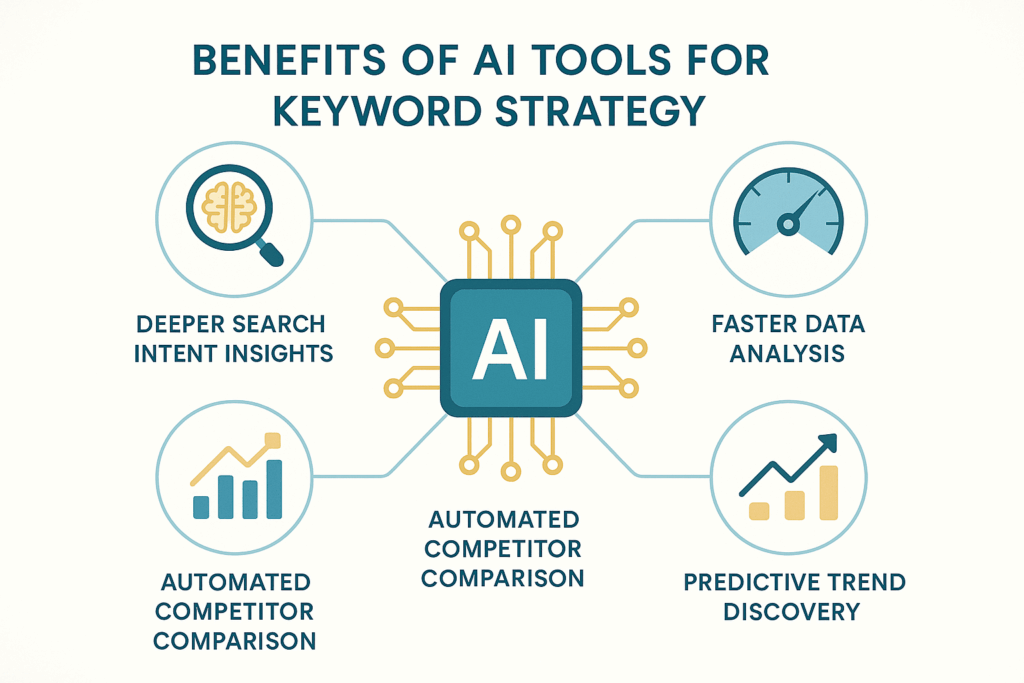
Integrating AI tools into keyword strategy is rewriting the playbook for digital marketers and SEO professionals. Rather than relying on static lists or limited manual inputs, AI offers a dynamic, ever-evolving approach that adapts as search behaviors shift. These tools use deep data analysis to uncover hidden opportunities, refine audience targeting, and predict search trends well before they peak. With their ability to process vast datasets in real time, AI-powered solutions streamline the keyword selection process and amplify the accuracy of semantic clustering. The result is not just time savings, but a strategy that’s genuinely aligned with user intent and market changes.
Practical Tips for Leveraging AI-Based Keyword Suggestions
Successfully incorporating AI-generated keyword suggestions into your SEO workflow demands a mix of technical savvy and creative strategy. First, it’s important to start by clearly defining your content goals, whether you’re targeting informational queries, transactional terms, or building brand authority. AI tools excel at providing expansive lists, but discernment is key: review suggestions for relevance and context, using AI’s clustering features to organize terms by intent, topic, or content funnel stage. Rather than purely focusing on high-volume keywords, leverage AI’s predictive analytics to surface emerging or long-tail terms that align closely with user needs yet aren’t oversaturated by competition.
Another practical tip is to integrate AI insights into your editorial planning and content calendars. By periodically running updated keyword analyses, you can identify shifts in user language or sudden spikes in trending topics, allowing your team to publish timely, relevant content. Many AI tools now offer competitive intelligence features, showing which topics your rivals are targeting effectively. Use this data to spot content gaps or underserved topics, then create clusters around these opportunities for maximum impact. At every stage, ensure AI outputs are human-curated; algorithms are powerful, but combining machine-generated data with human expertise ensures your brand voice and unique perspective shine through.
It’s also wise to view AI-driven suggestions as a continual process, not a set-and-forget task. Schedule regular reviews of performance metrics, adapting clusters and content as search intent evolves. Many AI platforms integrate with web analytics, so you can directly measure how AI-informed keyword choices affect engagement, click-through rates, and conversions. By staying agile, iterating based on AI’s ongoing insights, you place your SEO strategy on the cutting edge, all while maintaining the authentic, audience-focused approach emphasized in previous discussions about search intent and semantic clustering. In the rapidly changing digital landscape, leveraging AI for keyword discovery and organization is both a competitive necessity and an opportunity to bring fresh, user-centric ideas to your content strategy.
Which AI is best for SEO?
Choosing the right AI platform for SEO isn’t just a matter of picking the most advanced software; it’s about finding the tools that integrate seamlessly into your overall strategy and solve the specific challenges you face. With the explosive growth of AI in keyword research and semantic clustering, multiple platforms now provide unique benefits, catering to different marketing needs and scales.
For data-driven SEOs focused on actionable insights and intent analysis (as discussed in previous sections), tools like Dashspert and Clearscope stand out. Dashspert excels at turning complex search patterns into clear, prioritized recommendations, while Clearscope offers comprehensive content grading and thematic suggestions based on real SERP data. These platforms don’t just spit out keyword lists, they interpret user intent and help you map out entire content strategies that are both deep and adaptable.
If you’re looking for robust machine learning capabilities tied closely to competitive research and ongoing optimization, platforms such as SurferSEO and MarketMuse are powerful contenders. SurferSEO connects search data with on-page optimization, using AI-driven semantic analysis to recommend clusters that mirror current ranking content. MarketMuse, on the other hand, uses natural language processing to identify content gaps, suggest topic coverage, and automate parts of editorial planning, making it invaluable for larger teams or those looking to scale content operations rapidly.
No single AI is universally “the best” for every business. The effectiveness of an AI platform depends on how well it aligns with your workflow, budget, and strategic goals. When evaluating solutions, consider not only the algorithms’ sophistication but also user interface, integration with existing tools, and quality of support. Remember, the best AI for SEO is the one that helps you continuously adapt, excels at intent-driven clustering, and empowers you to connect with real users in an authentic and scalable way, building on the transformative benefits detailed earlier in this article.
How to Use AI for Keyword Research
Leveraging AI for keyword research takes much of the manual guesswork out of the process and transforms it into a dynamic, continuous optimization effort. Getting started typically begins with selecting the right AI-powered keyword research tool. These platforms use natural language processing and machine learning to analyze vast search data, uncover semantic relationships, and predict intentions behind queries. By simply inputting a seed keyword or a general topic, AI tools can instantly generate extensive lists of related keywords, questions, and topics, even exposing those long-tail variations and emerging trends that would otherwise go unnoticed with traditional methods.
Once you have your keyword list, don’t just look at search volume. AI solutions provide rich context around every suggestion, such as intent classification (whether a term is informational, transactional, or navigational), competitive density, and even seasonality trends. This added layer of insight enables marketers to build strategies that are both broad and targeted. Mapping keywords to distinct touchpoints in the buyer’s journey becomes much easier, allowing content to be customized for specific search intent and audience needs. In addition, AI-driven clustering capabilities empower you to group keywords around themes and topics holistically, which strengthens your semantic SEO and helps structure site architecture or content hubs.
Integration is everything when using AI for keyword research. Connect your AI tool to analytics or content management platforms to measure how keyword clusters and new content perform in real time. Regularly revisit and refresh your keyword sets as AI continues to learn from ongoing search data, ensuring your strategy evolves alongside your audience. Ultimately, using AI isn’t about automating away human creativity, it’s about enhancing decision-making, surfacing fresh opportunities, and allowing SEO professionals to focus more energy on crafting valuable, user-centric content that resonates and drives results.