



AI-assisted content creation vs human writing: best practices
As businesses and creators seek fresh ways to generate compelling online content, the debate between AI-assisted content creation and traditional human writing grows ever more relevant. Both approaches offer distinct advantages and challenges, from the efficient scalability of artificial intelligence to the nuanced creativity of the human touch. Understanding how to effectively leverage each method, and when to combine their strengths, can play a pivotal role in achieving high-quality, engaging content that resonates with audiences and meets the latest standards for digital communication.
Key Highlights
- AI tools drastically speed up content creation but lack the nuanced creativity and emotional resonance of human writers.
- Human creativity excels in storytelling, emotional connection, and building brand authenticity that AI cannot fully replicate.
- The most effective content strategies integrate AI efficiency with human editorial oversight for high-quality, engaging results.
- Current best practices recommend limiting AI-generated portions to about 30% to maintain originality and SEO value.
- Transparency in labeling AI-assisted content is rising, helping organizations build trust and refine their workflow.
The Emergence of AI-Assisted Content Creation
AI-assisted content creation is rapidly reshaping the landscape of digital writing. With advancements in natural language processing and automation, businesses and individuals are leveraging AI tools to generate a range of written materials faster and often with greater consistency. The shift isn’t just about speeding up production, it’s also about improving accuracy, optimizing language for search engines, and scaling creative efforts with limited resources. As the industry adapts, the ongoing debate about ai-assisted content creation vs human writing intensifies, encouraging content creators and strategists to evaluate the strengths and challenges presented by this emerging technology. For organizations eager to innovate, understanding this evolution is crucial for staying ahead.
How AI Tools Are Transforming Writing Processes
The influx of advanced AI writing tools is changing how content is designed, drafted, and distributed. Platforms powered by artificial intelligence analyze vast troves of data, user intent, and language trends, enabling them to produce drafts at unparalleled speeds. This shift plays a pivotal role in the discussion around ai-assisted content creation vs human writing, as it redefines traditional workflows. Where manual writing demanded hours for research, ideation, and revision, AI-powered platforms can now generate well-structured base content within minutes. This efficiency is especially valuable for businesses aiming to maintain publishing frequency or scale their content marketing strategies with a lean team.
However, the impact of AI goes beyond just speed. These tools can optimize headlines for click-through rates, suggest SEO-friendly phrasing, and even adapt language tone based on the intended audience. With such powerful features, organizations are empowered to maintain consistent messaging across channels and ensure each piece is tailored for performance. Despite the impressive efficiency, AI-assisted content creation does spark questions about originality. While machine-generated drafts serve as a solid foundation, the nuanced creativity, emotional resonance, and brand alignment that humans provide remain critical differentiators.
For those exploring solutions to maximize productivity and relevance, it’s important to blend the quick-turnaround strengths of AI with human-driven oversight and editorial finesse. Relying exclusively on AI can risk losing the unique perspective that sets brands apart. As your team evaluates ai-assisted content creation vs human writing, consider leveraging resources such as Dashspert for insights, best practices, and guidance on getting the most from this evolving partnership between technology and creativity.
Here are some practical ways to integrate AI tools into your writing process while preserving your unique creative voice:
- Start drafts with AI-generated outlines to organize ideas, then expand sections using your own insights and experiences.
- Use AI for grammar and spelling checks, but make personalized edits to maintain your authentic tone and style.
- Leverage AI suggestions for headlines or titles, then refine them to match your audience and brand messaging.
- Incorporate AI-powered research summaries to collect information quickly, supplementing with your own analysis and viewpoints.
- Collaborate with AI to generate alternative phrasing, choosing options that resonate best with your intended message.
- Set clear goals for each writing session, using AI tools for repetitive tasks and reserving creative decisions for yourself.
- Review AI-generated content critically, ensuring fact-checking and emotional nuance align with your standards.
Blending AI tools with human expertise can streamline your workflow, boost productivity, and enhance the originality of your writing.
The Value of Human Creativity in Content Writing
While AI tools bring remarkable efficiency to the content creation process, there’s a distinct value that only human creativity can deliver. Human writers possess an innate ability to create narrative depth, build emotional resonance, and deliver messaging with authenticity and nuance. These qualities often serve as the foundation for engaging content that not only informs but also inspires and connects with audiences on a personal level. By exploring how unique storytelling and the capacity to forge emotional connections set human writing apart, content creators will discover why human input remains an irreplaceable element in producing memorable, effective content strategies.
Unique Storytelling and Emotional Connection
Human writers naturally excel at weaving stories that capture the imagination and evoke genuine emotional responses. Unlike automated systems, people draw from a lifetime of personal experiences, cultural touchstones, and nuanced understanding of human behavior when crafting narratives. This depth allows them to paint vivid scenes, convey subtle humor, and develop relatable characters or personas, all of which help transform information into an engaging story. A well-told story has the power to linger in a reader’s mind long after the content has been read, encouraging deeper engagement, repeat visits, and even word-of-mouth sharing.
Emotional connection is another area where the human touch is unmatched. A skilled writer can identify the motivations, fears, and aspirations of their target audience, skillfully weaving these insights into messaging that resonates on a personal level. This connection builds trust and loyalty, qualities brands strive to cultivate but that algorithms often struggle to replicate authentically. Emotional cues, intuitive humor, and culturally rich references can be finessed with sensitivity and tact, ensuring that messages don’t just land but truly impact. While AI platforms can suggest phrasing based on sentiment analysis, they often miss the intricacies of irony, empathy, and inspiration that come naturally to human minds.
These unique qualities become especially important in brand storytelling and thought leadership. When content requires more than just information, when it must persuade, entertain, or inspire, human creativity shines brightest. By recognizing and valuing these strengths, organizations can more effectively balance technical efficiency with the unrepeatable value that only heartfelt, authentic human narratives can provide. This synergy elevates content beyond mere communication to create meaningful relationships between brands and audiences.
Best Practices for Integrating AI and Human Writing
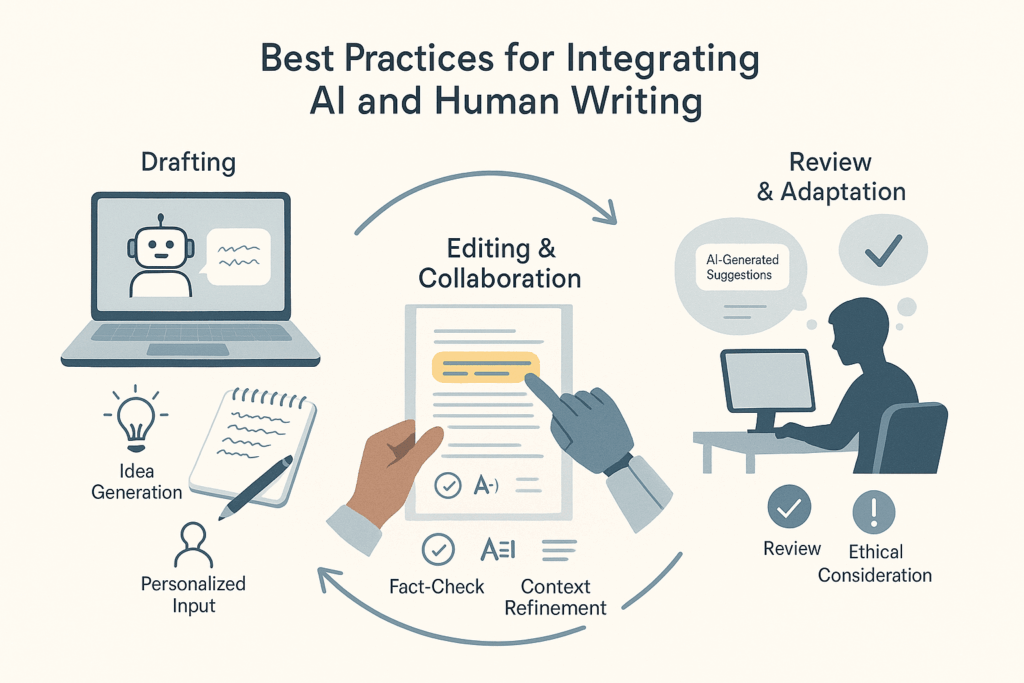
Combining the strengths of AI with human creativity takes thoughtful planning, yet it’s one of the most effective ways to maximize both productivity and originality in written content. Building on earlier discussions about the unique benefits each approach provides, this segment highlights strategies for seamless collaboration and outlines actionable tactics that empower teams to deliver higher-quality outputs. By embracing a deliberate integration process, organizations can consistently achieve messaging that is both efficient and resonant, harnessing the best of rapid automation alongside the nuance and emotional intelligence that only people can offer.
Tips for Collaborative Content Development
To make the most of AI and human synergies, consider structuring your content workflow so that both parties play to their strengths. Start by using AI tools to accelerate research, outline ideas, and draft foundational content. This isn’t about replacing your team but about equipping them to focus on more complex creative tasks. For example, leverage AI to sort through large datasets, pull out trending topics, or even generate SEO-friendly suggestions. Once a solid draft is in place, human editors and writers can step in, enriching the piece with brand voice, narrative finesse, and the emotional subtleties that deeply engage audiences.
Active feedback loops are also critical. Encourage writers and editors to routinely review AI-generated drafts, tagging areas that need more context or adjusting tone to better reflect your audience’s preferences. Many organizations find success through workshops that bring tech and creative staff together to discuss learnings, refine prompts, and develop shared guidelines. Such practices boost buy-in on both sides and foster an environment where technology and creativity enhance, rather than compete with, one another.
Additionally, it’s essential to prioritize transparency and alignment. Clearly define the purpose of each piece and set expectations for how AI-generated content should be incorporated. This can involve style guides, checklists, or even annotated examples highlighting how and why human input is critical post-generation. Consider adopting review stages where human insights are intentionally layered in to avoid generic messaging and reinforce original perspectives. Ultimately, consistently measuring results, analyzing engagement metrics and reader feedback, will inform future adjustments, ensuring your integration process continues to evolve and improve over time.
| Integration Tactic | AI Role | Human Role | Benefit |
| Content Generation | Drafts and expands ideas | Guides direction, reviews output | Speeds up initial writing |
| Editing & Proofreading | Detects grammar and style issues | Refines tone and context | Enhances clarity and polish |
| Research Support | Aggregates and summarizes data | Verifies facts, adds insights | Ensures accuracy and depth |
| Personalization | Suggests tailored content | Adjusts for audience and nuance | Boosts relevance and engagement |
This table highlights key collaborative strategies for integrating AI into the writing process, showcasing how AI tools amplify efficiency while human input ensures authenticity, accuracy, and creativity for truly effective communication.
Share of articles that were written by humans or generated by ai
The composition of digital content today is changing rapidly as both human writers and artificial intelligence tools contribute to the growing volume of articles published online. Current industry estimates suggest that up to 50% of newly published articles on major platforms have some level of AI-generated input, ranging from automated first drafts or topic suggestions to fully generated copy. However, the remaining share, particularly the highest-performing and most memorable articles, continues to be written or heavily edited by humans, especially for industries focused on thought leadership, creative storytelling, or nuanced communication.
This split arises partly from differing project requirements. Bulk content projects, such as product descriptions, FAQs, and news briefs, increasingly leverage AI for speed and cost-efficiency. Conversely, organizations seeking to build brand trust, foster loyalty, or communicate complex ideas still rely on human expertise to craft their messages. Analytics reveal that audiences are more likely to engage with in-depth features, opinion pieces, or long-form content that’s human-authored or where human creativity is layered atop AI suggestions.
It’s also important to consider editorial transparency. Many leading publishers now openly label AI-generated or AI-assisted content, which builds trust and helps audiences contextualize what they’re reading. This growing practice encourages organizations to be honest about their workflow and highlights the industry’s evolving best practices, balancing automation with a strong commitment to originality. As more data becomes available, stakeholders will continue to refine the blend of human and AI-generated articles to meet evolving standards for both authenticity and efficiency.
How much AI content is acceptable for SEO?
Deciding how much AI-generated content is acceptable for SEO often depends on maintaining both quality and authenticity in your publishing strategy. Search engines like Google are increasingly equipped to detect not only the presence of artificially generated text but also its potential impact on the user experience. Rather than setting a fixed percentage, SEO professionals and Google both emphasize that the value and originality of content are paramount. If AI is used extensively, it’s crucial that the resulting material is high quality, contextually relevant, and delivers genuine value to readers.
From earlier discussions on the integration of AI and human creativity, it’s clear that the most effective SEO strategies involve a thoughtful blend. AI excels at data analysis, identifying trends, and generating foundational drafts, making it an excellent starting point for large-scale or time-sensitive projects. However, unfiltered reliance on AI can lead to generic writing, a lack of nuance, or even factual and stylistic inconsistencies, factors that not only diminish reader trust but may also be penalized by search engine algorithms.
To maximize SEO benefits and uphold editorial integrity, organizations should prioritize human oversight throughout the content process. This means that even when AI drafts significant portions, human editors need to enhance emotional resonance, refine narratives, and ensure alignment with brand voice. Search engines reward pages that demonstrate authentic expertise, original insight, and user-focused information, which are strengths most reliably delivered by people. Ultimately, it’s less about a numerical threshold and more about how AI-driven efficiency can be responsibly balanced with human creativity to consistently meet, and exceed, search quality guidelines.
What is the 30% rule for AI?
The “30% rule” for AI refers to an emerging industry guideline that suggests limiting the portion of AI-generated content within any single piece to roughly one-third. This concept has gained traction as content creators and marketers search for practical frameworks that maintain balance between AI-driven efficiency and the authenticity that human writers provide. In the context of today’s rapidly shifting digital publishing landscape, as discussed previously, where both AI and human contributions shape content output, the 30% rule is seen as a way to leverage the speed and analytical capabilities of AI while safeguarding originality, trust, and SEO effectiveness.
The rationale behind the 30% benchmark centers on quality assurance and compliance with evolving search engine expectations. Search engines, particularly Google, increasingly prioritize content that delivers unique insights, demonstrates expertise, and offers a genuine user experience. Relying too heavily on AI can risk producing generic or repetitive text, which might lead to diminished reader engagement or even algorithmic penalties. By purposefully capping AI-generated portions, organizations can ensure human editors still have space to inject creativity, cultural context, and nuanced storytelling, elements detailed earlier as critical for building emotional connections and sustaining brand distinction.
Practically speaking, the 30% rule isn’t a rigid threshold but rather a guideline to foster careful editorial review. Teams may utilize AI for first drafts, data aggregation, or headline optimization, but reserve the majority of narrative building, personal anecdotes, and brand messaging for human writers. This collaborative approach supports the broader best practices discussed in earlier sections, integrating automation where it’s most effective, while always prioritizing the irreplaceable value that only people can deliver. Ultimately, the 30% rule helps set internal standards for responsible AI adoption, promoting transparency and high-quality outcomes as this technology continues to evolve.